Cognitive Load Theory

Stephen King
After writing a first draft quite quickly, King "breaks into elements".
His second draft is what he calls a surgical pass — a scene-by-scene examination in which each unit of the text is evaluated on its own terms.
Does this scene advance character? Does it advance the plot?
If it does neither, it goes.
King is not asking, at this stage, whether the book works as a whole. He is asking whether each individual piece does its specific job. King focuses on each one in isolation: a structured, element-by-element process.
John McPhee
McPhee starts by figuring out the structure of a piece. Then he writes himself a long note, essentially a memo to himself explaining what the piece is and how it will go.
Then he writes the lead.
Only the lead.
The lead contains what he calls the "seed" of the whole piece - its tone, its angle, its implicit promise to the reader.
He has said he will spend more time on an opening paragraph than on almost anything else in a piece.
The middle sections he treats as interchangeable blocks. He would write section headings on index cards and arrange them physically on his living room floor, testing different sequences, before writing a word of the sections themselves.
The writing of individual sections then happens somewhat independently, each needing to work on its own terms before being assembled into the whole.
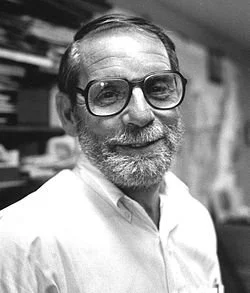

David Carr
The former New York Times journalist took McPhee’s approach to the extreme.
He believed that if the lede - the opening sentence or two - did not pull a reader in, the rest of the piece was worthless, because it would not be read. So the lede deserved not just disproportionate attention relative to its length. He would sometimes spend hours on a single opening sentence. He would write multiple completely different ledes - not revisions of the same attempt, but entirely different angles of entry into the same story - and then choose between them.
While King and McPhee are breaking a whole into its parts to improve each part. Carr is identifying the highest-leverage element and giving it time that is wildly out of proportion to its word count.
Both practices reflect Cognitive Load Theory: you cannot do justice to any single element of a piece if you are simultaneously managing all the others.
But Carr's approach suggests an additional principle for teachers: not all parts of a text are equal, and young writers benefit from understanding which elements carry the most weight.